
Better care, five minutes at a time.
Short, practical lessons for every role in a hospital: nurses, healthcare assistants, porters, housekeeping, reception and the people who lead them. One ward situation per lesson, the exact words and steps to use, on a phone between shifts.
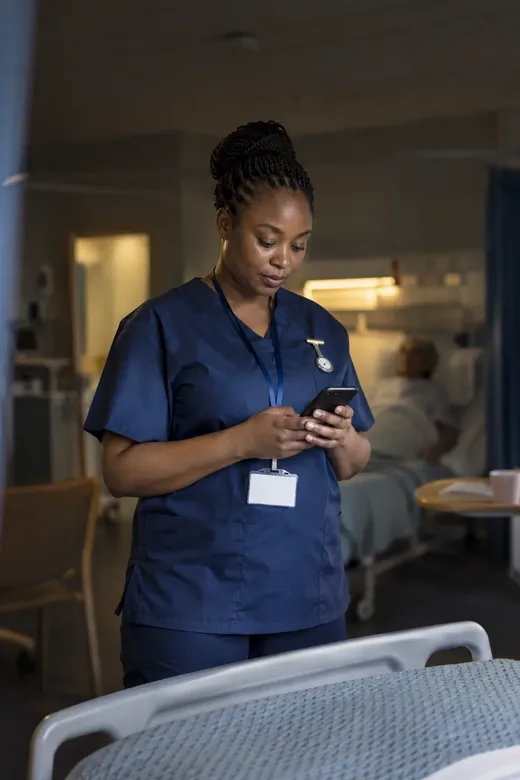
- 100
- lessons
- 20
- tracks
- 10
- areas of hospital work
- 5
- minutes each
Most hospital training is a module once a year. The rest is learned in a hurry, on shift.
A new starter shadows whoever is on duty, picks up their habits, good and bad, and fills the gaps under pressure. The standard lives in a policy folder nobody opens at three in the morning, and the same near misses come back with every new rota.
-
Too long to schedule
A classroom day means taking people off the ward, so it happens once a year, if the rota allows, and everything in between is word of mouth.
-
Too general to use
A slide about "escalating concerns" does not tell a porter what to say when the patient in the lift looks grey and sweaty.
-
Too rare to stick
A habit taught once is a memory, and a faint one. Safety behaviours need repeating until they are reflexes.
One situation, five minutes, the words to use.
Every lesson takes one real moment on a ward or in a department and shows what good looks like, what usually goes wrong and how to recover. A presenter talks it through; the learner reads, listens and answers.
-
One ward situation per lesson
A missed hand hygiene moment, a relative shouting at the desk, a patient who "seemed fine an hour ago". The lesson shows the standard, the common mistake and the recovery, with the exact phrases.
-
Plain English, for every role
Written for teams where English is often a second language. Short sentences, no jargon, and every term explained in one line the first time it appears.
-
Checked, not assumed
Each lesson ends with a few questions about what you would actually do, so the habit is tested before the next shift tests it for real.
Built for the whole hospital, not just the nurses' station.
Tracks are organised by area and by role, so a porter, a receptionist, a housekeeper and a charge nurse each get the lessons that match their day.
-
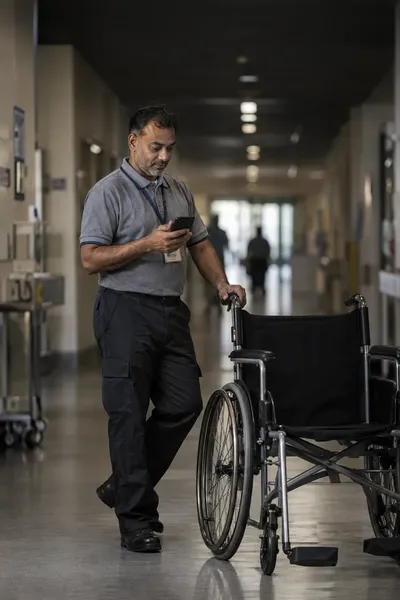
Porters and transport
Safe moving and handling, corridors and lifts, spotting a patient who is getting worse, what to say and who to tell.
-

Reception and administration
First contact, calming anger and frustration, confidentiality at the desk and emergencies in the waiting room.
-
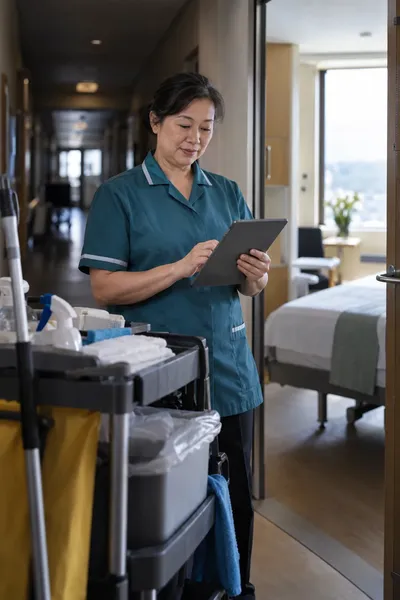
Housekeeping and support
Cleaning and decontamination, isolation rooms, spills, waste streams and dignity on the ward.
-

Charge nurses and leads
Taking charge of a shift, handovers that lose nothing, speaking up for safety and supporting new starters.
Ten areas of hospital work, opened track by track.
Every area starts with practical foundations and goes deeper by role. Free tracks let anyone begin; Premium opens the rest for a person or a whole team.
-
Patient Safety and Infection Prevention
3 tracks, 15 lessons- Hand Hygiene That Actually WorksFree to start
- Protective Equipment Done Right
- Falls Prevention on Every Shift
-
Communicating with Patients and Families
2 tracks, 10 lessons- Introducing Yourself and Setting the Tone
- Calming Anger and Frustration
-
Emergencies and Escalation
3 tracks, 15 lessons- Recognising a Patient Who Is Getting WorseFree to start
- Sepsis Awareness for Every Role
- Structured Escalation With SBAR
-
Dignity, Safeguarding and Consent
2 tracks, 10 lessons- Personal Care With Dignity
- Recognising Abuse and Neglect
-
Medicines and Handovers
2 tracks, 10 lessons- Medicines Around the Ward: What Every Role Must KnowFree to start
- Shift Handover That Loses Nothing
-
Moving, Handling and Physical Safety
1 tracks, 5 lessons- Safe Moving and Handling Principles
-
Records, Confidentiality and Information
2 tracks, 10 lessons- Writing Notes That Protect Patients and YouFree to start
- Keeping Patient Information Private
-
Teamwork and Wellbeing on Shift
2 tracks, 10 lessons- Speaking Up for Safety
- Shift Work, Sleep and Nights
-
Department Essentials
2 tracks, 10 lessons- How the Emergency Department WorksFree to start
- A Day on the Ward: Rhythm and Priorities
-
Leading Shifts and Teams
1 tracks, 5 lessons- Taking Charge of a Shift
New tracks are added to the library over time. What you see here is what learners can open in the app today.
Start free. Pay for the rest by the month, the year or the seat.
Free tracks cost nothing. Past them there is one flat price for a person and one price per seat for a ward, a department or a whole hospital, in US dollars.
- Free
- Free tracks across several areas: hand hygiene, spotting deterioration, medicines on the ward, writing notes and more.
- $29.99 a year
- Every area and every track, for one person, billed once a year.
- $24.00 per seat, a year
- Per seat for a team or a hospital, with an invite link, a web dashboard and invoices.
Before you ask
How long does a lesson take?
Is it clinical training?
Is it only for nurses?
Is it only for people who speak English well?
Does it work on a phone?
How do we know whether staff actually did the training?
What does it cost?
Tell us about your team.
Say roughly how many staff you have and which wards or departments you want to start with. We answer every message ourselves.
Get in touchStraight to a person, not a sales sequence.